
Applications in More Industries
Ocean Elite supports cross-industry material design with Hollow Glass Microspheres for rubber and elastomers, adhesives, building materials, aerospace and electronics where lightweighting, insulation, dimensional stability and functional integration matter.
Rubber & Elastomers
Adhesives
Building Materials
Aerospace
Electronics
Weight Reduction
Lower material density
Processability
Improve flow behavior
Thermal Management
Support insulation design
Dimensional Stability
Reduce shrinkage risk
Functional Integration
Enable more design freedom
Why More Industries Are Adopting Hollow Glass Microspheres
Hollow Glass Microspheres have already been widely used in coatings, plastics, composites, marine engineering and oil and gas exploitation. As lightweight design, high-performance composites and functional material requirements continue to grow, their application scope is expanding into more specialized industries.
For engineers, HGMs are not only low-density fillers. They are engineering materials that can simultaneously influence weight, processing performance, thermal management, dimensional stability and functional integration.
- Reduce material density in rubber, adhesives, building materials and composite systems.
- Improve processing fluidity in selected formulations.
- Reduce shrinkage and warpage risk in dimension-sensitive systems.
- Support thermal insulation, electrical insulation and low dielectric design.
Compared with Traditional Fillers
| MATERIAL TYPE | TYPICAL ROLE | DECISION NOTE |
|---|---|---|
| Calcium Carbonate | Mainly used to reduce cost. | If cost is the only target, traditional fillers may be enough. |
| Talc Powder | Mainly used to improve rigidity. | If stiffness is the key target, talc can help, but density may increase. |
| Glass Fiber | Mainly used to enhance strength. | If strength reinforcement is required, glass fiber is useful but may affect processing and surface quality. |
| Hollow Glass Microspheres | Reduce density, improve processability, reduce shrinkage, support insulation and increase design freedom. | If multiple performance targets must be balanced in one system, HGMs are often the better engineering filler. |
How Engineers Choose the Right Application Direction
Different industries focus on different microsphere properties. Engineers should select density, particle size distribution and compressive strength according to the actual system, processing route and performance target.
| INDUSTRY | KEY PARAMETERS | TYPICAL SELECTION LOGIC |
|---|---|---|
| Rubber & Elastomers | Flexibility, weight, processability | If hand feel and flexibility matter, avoid grades that damage elasticity or processing flow. |
| Adhesives | Rheology, thickness control, shrinkage | If adhesive layer control is critical, test rheology and shrinkage before scale-up. |
| Building Materials | Thermal conductivity, density, durability | If insulation and system load matter, balance low density with durability. |
| Aerospace | Specific strength, weight, functional integration | If weight reduction has high system value, verify strength retention and thermal behavior. |
| Electronics | Insulation, dielectric properties, dimensional stability | If electronic reliability matters, confirm dielectric behavior and dimensional stability. |
Quick Selection Logic
Start from the industry pain point, not from the lowest density alone.
- If weight is the main issue – compare true density and final part performance.
- If processing is unstable – evaluate particle size and flow response.
- If insulation is required – check thermal or electrical performance targets.
- If precision matters – verify shrinkage, warpage and dimensional stability.
Performance Value Across Industries
Lower Density
Reduces weight in rubber, adhesives, panels and functional systems.
Better Flowability
Supports processing and formulation workability.
Less Shrinkage
Helps reduce shrinkage and warpage in selected systems.
Thermal Insulation
Supports building, aerospace and thermal management applications.
Electrical Insulation
Useful for electronic and functional adhesive systems.
Dimensional Stability
Improves part consistency and precision in engineered materials.
Design Freedom
Helps integrate multiple material functions in one formulation.
More Industry Application Directions
Rubber & Elastomers
Adhesives
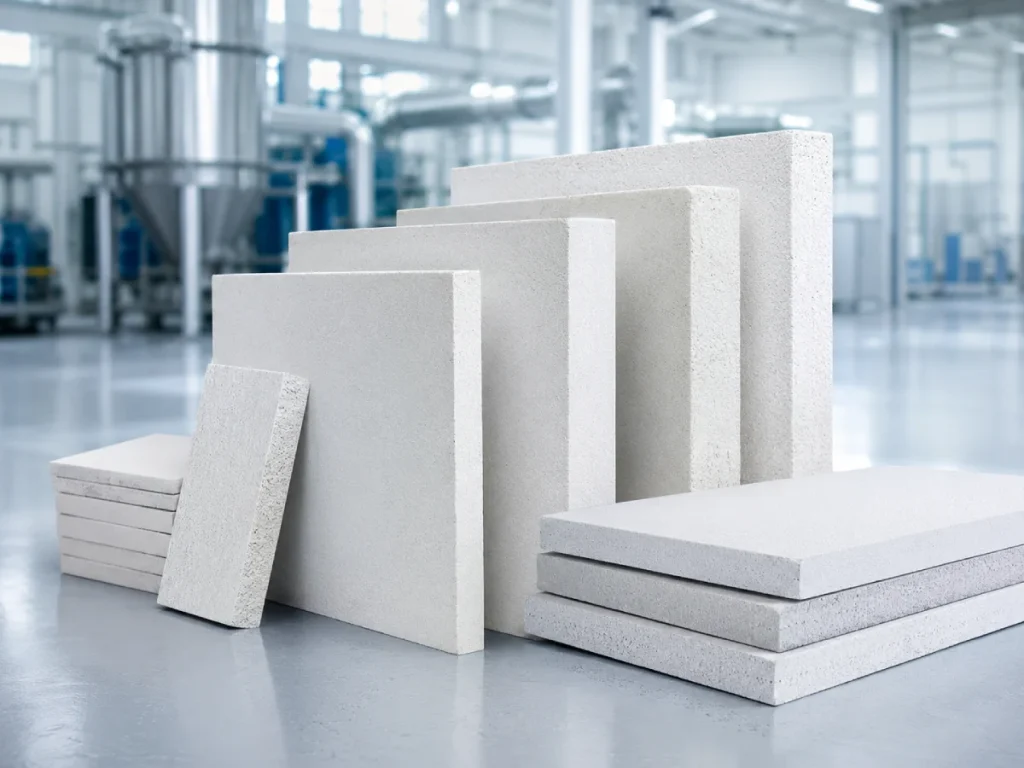
Building Materials
Aerospace Materials
Electronics
More Industries Do's and Don'ts
Recommended Practices
✅ Define the target industry and main performance pain point first.
✅ Match HGM density, particle size and compressive strength to the formulation.
✅ Test processing flow, shrinkage and final functional performance together.
✅ Use application-specific validation before bulk adoption.
Common Selection Mistakes
❌ Using one HGM grade across rubber, adhesive, building and electronics systems.
❌ Choosing only by low density while ignoring processability or strength.
❌ Ignoring dielectric, insulation or durability requirements in functional systems.
❌ Skipping formulation testing before production scale-up.
Customization & Technical Support
Ocean Elite can support HGM grade selection for rubber and elastomers, adhesives, building materials, aerospace materials and electronics applications.
- Industry-based application screening
- Density and particle size matching
- Processability and shrinkage evaluation direction
- Thermal, electrical and dimensional stability review
- Application-based sample recommendation
Testing Documentation for More Industry Applications
Before bulk use, each industry formulation should verify whether HGMs can meet lightweighting, processing, insulation, dimensional stability and functional integration requirements in the actual material system.
- True density and final product weight comparison
- Particle size distribution and dispersion behavior
- Compressive strength and breakage rate review
- Rheology, flowability and thickness control testing
- Thermal conductivity or dielectric performance testing when required
- Shrinkage, warpage, durability and dimensional stability review
Recommendation: Confirm HGM performance in the actual rubber, adhesive, building material, aerospace or electronic formulation before production use.

Frequently Asked Questions
1. What industries can use Hollow Glass Microspheres beyond coatings, plastics and composites?
Hollow Glass Microspheres can be used in rubber and elastomers, adhesives, building materials, aerospace materials and electronics. These industries use HGMs to reduce weight, improve processability, support thermal management, enhance dimensional stability and integrate functional performance.
2. Why are more industries adopting Hollow Glass Microspheres?
More industries are adopting Hollow Glass Microspheres because traditional fillers usually solve only one problem, while HGMs can reduce material density, improve processing fluidity, reduce shrinkage and warpage, enhance dimensional stability, improve thermal insulation, provide electrical insulation and increase functional design freedom.
3. How are HGMs used in rubber and elastomers?
In rubber and elastomer systems, HGMs help reduce product weight while maintaining flexibility and elasticity. Typical applications include automotive weatherstrips, industrial seals, shock absorption components, foaming systems for shoe materials, TPE products and TPU products.
4. How do HGMs support adhesive formulations?
In adhesive formulations, HGMs help improve rheological properties, control adhesive layer thickness, reduce overall system weight and reduce shrinkage in selected applications. Typical systems include epoxy adhesives, polyurethane adhesives, acrylic adhesives, structural adhesives and sealants.
5. Why are HGMs useful in building materials?
HGMs are useful in building materials because their low thermal conductivity helps improve thermal management and their low density helps reduce building system load. Applications include building thermal insulation materials, thermal insulation mortar, functional coatings, lightweight composite panels and building filling systems.
6. What parameters should engineers compare across different industries?
Engineers should compare microsphere density, particle size distribution and compressive strength according to the application. Rubber and elastomers focus on flexibility, weight and processability; adhesives focus on rheology, thickness control and shrinkage; building materials focus on thermal conductivity, density and durability; aerospace focuses on specific strength, weight and functional integration; electronics focuses on insulation, dielectric properties and dimensional stability.