
Application of Hollow Glass Microspheres in Construction Materials
Ocean Elite supports construction material formulations with Hollow Glass Microspheres for artificial marble, tooling board, polyester furniture, repair composite putty and lightweight GRP core materials where low density, insulation, dimensional stability and surface quality are required.
Low Density
Thermal Insulation
Acoustic Insulation
Dimensional Stability
Surface Quality
Artificial Marble
Lower panel density
Tooling Board
Improve CNC machining
Polyester Furniture
Save raw resin
Repair Putty
Improve controllability
GRP Core Material
Reduce core weight
High-Performance HGMs for Green Building and Composite Materials
With low density, high compressive strength and spherical structure, Hollow Glass Microspheres are widely used in construction materials, especially green building materials and composite materials. HGMs can reduce the overall density of finished products, improve thermal insulation, sound insulation, dimensional stability and surface finish.
As an essential functional filler, HGMs optimize material properties and cut production costs for fiberglass reinforced plastics, artificial marble, tooling board, polyester furniture and lightweight GRP core materials.
- Reduce composite and finished building component density.
- Improve thermal resistance and sound absorption.
- Reduce shrinkage and warpage in panels and construction parts.
- Upgrade surface flatness, smoothness, coating and decorative outcomes.
- Enhance fluidity and uniform filling during production.
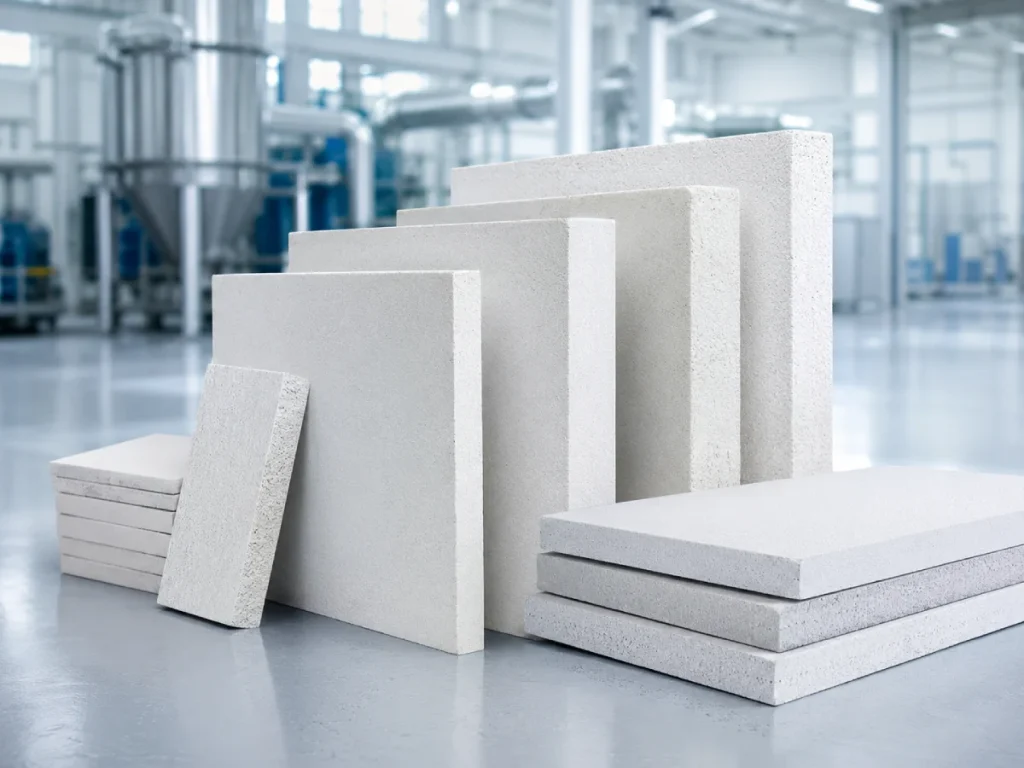
Advantages of Hollow Glass Microspheres for Construction Materials
| ADVANTAGE | CONSTRUCTION MATERIAL VALUE | ENGINEERING RESULT |
|---|---|---|
| Lightweight Performance | The hollow structure greatly reduces the density of composites and finished building components. | Supports weight reduction in panels, furniture boards, molds, prototypes and GRP core structures. |
| Thermal & Acoustic Insulation | Internal encapsulated gas inside microspheres improves thermal resistance and sound absorption. | Helps save energy and enhance living comfort in green building material systems. |
| Excellent Dimensional Stability | Uniformly dispersed spherical microspheres reduce shrinkage and warpage. | Improves dimensional precision of panels and construction parts. |
| Improved Surface Quality | HGMs upgrade surface flatness and smoothness. | Supports better coating, polishing and decorative outcomes. |
| Optimized Processability | During production of artificial marble, tooling board, furniture and GRP core materials, HGMs enhance fluidity and uniform filling. | Helps minimize production defects and improve output consistency. |
Engineer Selection Guide for Construction Material HGMs
The selection of HGMs for construction materials depends on density, particle size distribution, compressive strength, surface modification and oil absorption. These indicators directly influence weight control, processability, microsphere survival rate, interfacial bonding and resin consumption.
| PARAMETER | ENGINEERING FUNCTION |
|---|---|
| Density | Control component weight to achieve lightweight design. |
| Particle Size Distribution | Improve fluidity and uniform filling effect. |
| Compressive Strength | Ensure high survival rate of microspheres during mixing and processing. |
| Surface Modification | Strengthen interfacial bonding with resin or adhesive to optimize surface properties. |
| Oil Absorption | Cut resin consumption and lower overall material cost. |
How to Choose the Right HGM Grade?
Start from the construction material system and processing route, then confirm the target density, required surface quality, strength retention and resin cost target.
For artificial marble: focus on density, impact resistance and surface appearance.
For tooling board: focus on CNC machining efficiency and dimensional accuracy.
For polyester furniture: focus on resin saving, smoothness and rigidity.
For repair putty: focus on adhesion, spreading fluidity and sanding behavior.
Application Advantages Overview: Construction Materials
Lightweight & Energy Saving
Reduce product weight, raise construction efficiency and improve energy efficiency.
Thermal & Sound Insulation
Upgrade indoor comfort and energy conservation performance.
Dimensional Stability
Improve component precision and reduce shrinkage or warpage risk.
Smooth Surface
Support better decorative performance, coating appearance and polishing results.
Cost Reduction
Decrease resin dosage and reduce material cost in suitable formulation systems.
Typical Application in Construction Products
Artificial Marble
Benefits: Shorten curing period, strengthen crack resistance, reduce rejection rate and manufacturing cost.
Tooling Board
Benefits: Lighten molds and prototypes for easy transportation and machining.
Polyester Furniture
Benefits: Save around 50% raw resin, improve abrasion resistance and polishing property while retaining structural rigidity.
Repair Composite
Benefits: Improve spreading fluidity and lower material loss during sanding and polishing.
Lightweight GRP Core Material
Benefits: Maintain panel rigidity and structural strength, suitable for roof panels, furniture, sports goods and model components.
Construction Materials Do's and Don'ts
Recommended Practices
✅ Define the target product first: artificial marble, tooling board, furniture board, putty or GRP core.
✅ Match density and particle size distribution to the required flow and filling behavior.
✅ Confirm compressive strength before high-shear mixing or machining routes.
✅ Test surface finish, curing behavior, sanding loss and final part weight together.
Common Selection Mistakes
❌ Choosing the lowest density grade without checking breakage rate.
❌ Ignoring oil absorption when resin cost is a key target.
❌ Using one grade for artificial marble, tooling board and putty without separate validation.
❌ Judging only raw material cost instead of finished product rejection rate and processing efficiency.
Customization & Technical Support
Ocean Elite can support HGM grade screening for construction material systems where lightweighting, thermal insulation, sound insulation, surface smoothness and cost reduction need to be balanced.
- Density and particle size matching
- Compressive strength review for mixing survival
- Surface modification direction for resin or adhesive bonding
- Oil absorption comparison for resin saving
- Application-based sample recommendation
Quality-Controlled HGMs for Construction Material Testing
Before bulk use, construction material formulas should verify whether HGMs can meet the actual requirements for density reduction, flowability, surface finish, dimensional stability, strength retention and resin consumption.
- True density and final part weight comparison
- Particle size distribution and dispersion behavior
- Compressive strength and microsphere survival rate
- Resin consumption, oil absorption and cost comparison
- Surface finish, polishing and sanding behavior
- Curing, shrinkage, warpage and dimensional stability review
Recommendation: Confirm HGM performance inside the actual artificial marble, tooling board, furniture board, repair putty or GRP core material formula before production use.

Frequently Asked Questions
1. What are Hollow Glass Microspheres used for in construction materials?
Hollow Glass Microspheres are used in construction materials to reduce product density, improve thermal and acoustic insulation, enhance dimensional stability, improve surface finish and optimize processing. Typical applications include artificial marble, tooling board, polyester furniture, repair composite putty and lightweight GRP core materials.
2. How do HGMs improve artificial marble?
In artificial marble, HGMs lower panel density, improve impact resistance and support better surface appearance. They can also help shorten curing time, strengthen crack resistance, reduce rejection rate and lower manufacturing cost.
3. Why are HGMs useful in tooling board?
In tooling board, HGMs reduce bulk density, improve CNC machining efficiency and support dimensional accuracy. Lower weight makes molds and prototypes easier to transport, handle and machine.
4. How do HGMs support polyester furniture and repair putty?
In polyester furniture, HGMs reduce board weight, refine surface smoothness, save around 50% raw resin in suitable systems and improve abrasion resistance and polishing performance. In repair composite or polyester putty, HGMs reduce compound density, improve adhesion, improve spreading fluidity and reduce material loss during sanding and polishing.
5. What is the value of HGMs in lightweight GRP core materials?
In lightweight GRP core materials, HGMs reduce core weight in sandwich composite structures while helping maintain panel rigidity and structural strength. They are suitable for roof panels, furniture, sports goods and model components.
6. What parameters should engineers check when selecting HGMs for construction materials?
Engineers should check density, particle size distribution, compressive strength, surface modification and oil absorption. These parameters affect component weight, fluidity, filling uniformity, microsphere survival rate, interfacial bonding, resin consumption and overall material cost.