
Solid Buoyancy Materials
Lightweight, High Pressure-Resistant Buoyancy Materials for Marine Engineering and Deep-Sea Systems
Ocean Elite Solid Buoyancy Materials are engineered composite materials made from Hollow Glass Microspheres and resin systems, designed to provide high buoyancy, pressure resistance, low water absorption, and long-term seawater stability for marine and subsea applications.
High Buoyancy
High Pressure Resistance
Low Water Absorption
Seawater Stability
Marine Engineering Use
Multiple Density Grades
Solid buoyancy material grades are available for different operating depths, buoyancy requirements, and pressure resistance levels.
Depth-Based Selection
Material selection can be matched according to target water depth, density range, hydrostatic strength, and module design.
Low Water Absorption
Low water absorption helps maintain buoyancy stability during long-term seawater immersion.
Marine Engineering Support
Suitable for buoyancy modules, pipeline support systems, composite foam cores, subsea instruments, and deep-sea equipment.
Custom Material Combination
Density grading and material combination can be adjusted according to buoyancy distribution and pressure-bearing requirements.
High-Performance Solid Buoyancy Materials from Ocean Elite
Ocean Elite Solid Buoyancy Materials are high-performance engineered composites made from Hollow Glass Microspheres and resin systems. They are designed for marine engineering applications where low density, buoyancy support, pressure resistance, and long-term seawater stability are critical.
These materials are used in manned and unmanned submersibles, subsea cables, offshore platforms, subsea mining vehicles, riser systems, buoyancy modules, and pipeline support systems. Their low-density structure helps reduce system weight while providing reliable buoyancy under underwater pressure.
The main value of Solid Buoyancy Materials is to help engineers balance lightweight design and structural safety. By selecting suitable density combinations and graded material strategies, buyers can improve buoyancy distribution, pressure resistance, and long-term underwater reliability.
- High buoyancy for marine and subsea systems
- High compressive strength for deepwater pressure
- Low water absorption for long-term stability
- Compatible with composite material systems
- Density combination support for system design
- Custom material selection based on depth and buoyancy needs
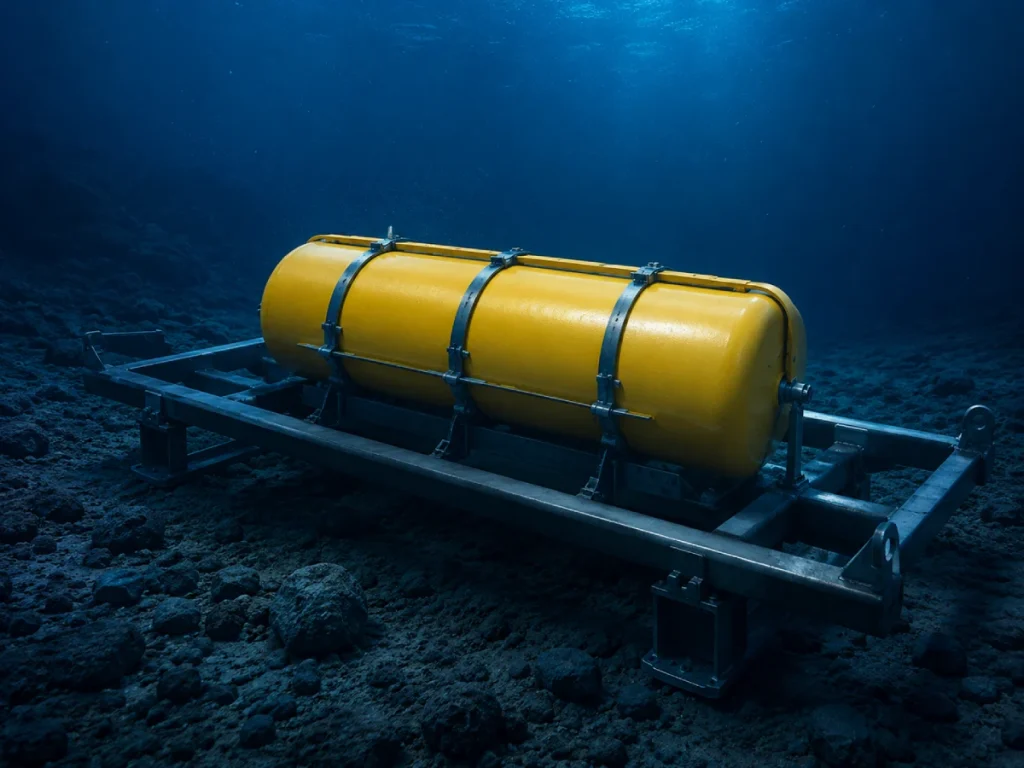
Solid Buoyancy Materials Performance Summary
The following performance summary helps marine engineers and technical buyers quickly evaluate Solid Buoyancy Materials before grade selection. Actual material choice should be confirmed according to operating depth, density requirement, buoyancy module size, hydrostatic pressure, water absorption, and long-term seawater exposure conditions.
| Characteristic Dimension | Core Parameters | Core Performance |
|---|---|---|
| Material Composition | Hollow Glass Microspheres and resin composite system | Provides lightweight buoyancy support with pressure-resistant structural performance. |
| Density Range | 0.36–0.70 g/cm³ | Determines overall buoyancy module weight, displacement, and lightweighting effect. |
| Hydrostatic Compressive Strength | Grade-dependent; up to ≥170 MPa | Supports underwater pressure resistance and structural safety in deep-sea environments. |
| Water Absorption | <1 under specified pressure and 24h test conditions | Helps maintain stable buoyancy and material integrity during seawater immersion. |
| Operating Water Depth | 600–11,500 m by grade selection | Suitable for different marine engineering depths when density and strength are correctly matched. |
| Long-Term Stability | Designed for seawater exposure | Supports marine systems requiring stable buoyancy, corrosion resistance, and underwater durability. |
Engineering Note:
Do not select Solid Buoyancy Materials by density alone. Lower density helps improve buoyancy, but deeper applications require stronger hydrostatic pressure resistance and verified long-term water absorption performance.
Solid Buoyancy Materials Series Technical Parameters
Ocean Elite Solid Buoyancy Materials are available in multiple grades for different operating depths and pressure-bearing requirements. Engineers can compare applicable depth, density, water absorption, and hydrostatic crush strength before selecting the most suitable material grade.
| Series | Applicable Depth | Density | Water Absorption | Hydrostatic Crush Strength |
| OE36-D600 | 600 m | 0.36±0.01 g/cm³ | 7 MPa @ 24h, <1% | ≥25 MPa |
| OE42-D1500 | 1,500 m | 0.42±0.01 g/cm³ | 18 MPa @ 24h, <1% | ≥30 MPa |
| OE45-D2000 | 2,000 m | 0.45±0.01 g/cm³ | 24 MPa @ 24h, <1% | ≥35 MPa |
| OE48-D3000 | 3,000 m | 0.48±0.01 g/cm³ | 36 MPa @ 24h, <1% | ≥50 MPa |
| OE50-D4000 | 4,000 m | 0.50±0.01 g/cm³ | 44 MPa @ 24h, <1% | ≥60 MPa |
| OE54-D5000 | 5,000 m | 0.54±0.01 g/cm³ | 55 MPa @ 24h, <1% | ≥80 MPa |
| OE56-D6000 | 6,000 m | 0.56±0.01 g/cm³ | 66 MPa @ 24h, <1% | ≥96 MPa |
| OE58-D7000 | 7,000 m | 0.58±0.01 g/cm³ | 77 MPa @ 24h, <1% | ≥112 MPa |
| OE63-D11500 | 11,500 m | 0.63±0.01 g/cm³ | 121 MPa @ 24h, <1% | ≥140 MPa |
| OE68-D11500 | 11,500 m | 0.68±0.01 g/cm³ | 121 MPa @ 24h, <1% | ≥170 MPa |
Selection Note:
Lower-density grades are suitable when overall buoyancy and lightweighting are the main design targets. Higher-density and higher-strength grades are more suitable for deeper operating depths, higher hydrostatic pressure, and applications where long-term underwater safety is critical.
Solid Buoyancy Materials Grades & Selection Guide
Select the right solid buoyancy material based on operating depth, buoyancy requirement, density range, hydrostatic compressive strength, water absorption, and long-term seawater stability. The right material combination helps improve buoyancy support while maintaining underwater structural safety.
Lower Density Requirement
Higher Pressure Resistance
Long-Term Seawater Use
Custom Buoyancy Module
Key Selection Factors for Solid Buoyancy Materials
True Density
Density affects the weight, displacement, and buoyancy performance of the final module. Lower density helps improve buoyancy, but it should be selected together with pressure resistance and structural requirements.
Hydrostatic Compressive Strength
Hydrostatic compressive strength determines whether the material can maintain shape and buoyancy under underwater pressure. Deep-sea applications require stronger pressure-resistant material combinations.
Water Absorption
Low water absorption helps maintain long-term buoyancy stability during seawater immersion. Poor water resistance may reduce buoyancy performance and affect material integrity over time.
Operating Depth
Operating depth is a key factor in material selection. Deeper applications require stronger pressure resistance, suitable density grading, and long-term stability verification.
Material Combination
Different density combinations can be used to balance lightweighting and localized strength. Low-density materials provide overall buoyancy, while medium-density or stronger materials can improve pressure-bearing areas.
Solid Buoyancy Materials Applications by Industry
Buoyancy Modules and Pipeline Support Systems
Best-fit use: Buoyancy modules, floats, buoys, pipeline supports, riser systems, and marine support structures.
Core Filling for Composite Foam Systems
Best-fit use: Composite foam systems, lightweight marine structures, buoyancy cores, and pressure-resistant composite components.
Deep-Sea Engineering Equipment
Best-fit use: ROV systems, manned and unmanned submersibles, subsea mining vehicles, underwater instruments, and deep-sea buoyancy systems.
Subsea Cables and Riser Systems
Best-fit use: Subsea cables, riser systems, offshore energy structures, marine engineering support systems, and underwater installation projects.
Solid Buoyancy Materials Sourcing Do’s and Don’ts
Recommended Sourcing Practices
✅ Confirm target operating depth and buoyancy requirement before material selection.
✅ Select density range according to buoyancy performance and local pressure-bearing needs.
✅ Test hydrostatic compressive strength and water absorption before large-scale application.
✅ Evaluate long-term seawater stability under the expected service environment.
✅ Review material grade, density tolerance, testing condition, and module design before bulk production.
Common Sourcing Mistakes
❌ Selecting only by low density without checking pressure resistance.
❌ Ignoring water absorption during long-term seawater immersion.
❌ Using one density grade across different pressure-bearing areas without evaluation.
❌ Skipping pilot-scale testing before final buoyancy module production.
❌ Choosing a material without confirming applicable depth and hydrostatic crush strength.
Customization & Technical Support
Ocean Elite can support buyers and engineers with application-based Solid Buoyancy Materials selection. The goal is to help match the right density, buoyancy module design, hydrostatic pressure resistance, water absorption performance, and long-term seawater stability before large-scale production.
- Density range selection
- Buoyancy module material matching
- Hydrostatic pressure resistance optimization
- Low water absorption material support
- Density grading and material combination
- Application-based sample testing support
- Technical documentation and test data support
- Custom module size and material design discussion
Quality-Controlled Solid Buoyancy Materials with Testing Documentation
Ocean Elite focuses on stable Solid Buoyancy Materials performance for marine engineering and deep-sea applications. Key quality control points include density, hydrostatic compressive strength, water absorption, material appearance, seawater stability, surface treatment, packaging condition, and batch consistency.
For marine engineers and technical buyers, stable quality helps reduce buoyancy failure risk, pressure-related material damage, and long-term underwater performance uncertainty.
Testing and Documentation Items:
- Incoming raw material inspection
- Density and buoyancy performance testing
- Hydrostatic compressive strength evaluation
- Water absorption and seawater stability testing
- Material combination and grading review
- Batch traceability and stable supply assurance
- Application-specific technical data support
- Packaging inspection before delivery
Recommendation:
Before bulk production, buyers should confirm the target operating depth, buoyancy module design, density requirement, pressure condition, testing method, and expected service environment. This reduces the risk of material mismatch between sample testing and real underwater operation.
Frequently Asked Questions
1.What are Solid Buoyancy Materials made from?
Solid Buoyancy Materials are engineered composites made from Hollow Glass Microspheres and resin systems. This structure helps provide low density, high buoyancy, pressure resistance, and long-term seawater stability.
2.What are Solid Buoyancy Materials used for?
They are used in buoyancy modules, pipeline support systems, subsea cables, riser systems, offshore platforms, ROV systems, submersibles, underwater instruments, and deep-sea engineering equipment.
3.What density range is available for Solid Buoyancy Materials?
Typical density ranges from 0.36 to 0.70 g/cm³, depending on grade and operating depth requirement. Lower-density grades support stronger lightweighting, while higher-density grades usually provide better pressure resistance.
4.What is the typical hydrostatic compressive strength?
Hydrostatic compressive strength depends on the grade. Ocean Elite series options range from ≥25 MPa for shallower applications to ≥170 MPa for high-depth requirements such as 11,500 m operating depth.
5.How does water absorption affect buoyancy performance?
High water absorption can reduce buoyancy stability and damage material integrity during long-term seawater immersion. Low water absorption helps maintain stable buoyancy and underwater reliability.
6.Can Solid Buoyancy Materials be used in deep-sea equipment?
Yes. Suitable grades can be used in deep-sea engineering equipment, ROV systems, submersibles, subsea mining vehicles, and underwater instruments. Grade selection should match operating depth and hydrostatic pressure requirements.
7.What should be tested before large-scale production?
Buyers should test density, hydrostatic compressive strength, water absorption, buoyancy performance, material compatibility, seawater stability, and long-term performance under simulated service conditions.
8.Can Ocean Elite support custom Solid Buoyancy Materials?
Yes. Ocean Elite can support density selection, pressure resistance matching, material combination, sample testing, and technical data support according to target operating depth, buoyancy requirement, and application environment.